
Your business plan is not your strategy, and confusing the two is costing you
One of the first things we explore with a founder is how they think about the difference between their strategy and their business plan. Not to test them, but because understanding how they see that distinction tells us a lot about where the business currently is and what it actually needs.
Most founders can speak confidently about what they are doing day to day. Where it gets harder is articulating the strategic direction underneath all of that activity, what the business is genuinely trying to achieve, why it is positioned the way it is, and how the plan supports that rather than just driving more activity. When those answers are not clear, that is usually where we start.
The pattern we see most often is that founders describe their business in terms of what they are doing, what they are launching, what they are building, what they are planning to add next quarter. But underneath all of it something is missing, because there is no clear sense of what they are choosing, what they are protecting, what they are willing to stop, or what they genuinely believe gives them an edge over everyone else doing something similar.
They talk about what they are doing rather than where they are going and the clearest sign that something is off is that everything feels equally important. There is no hierarchy, no sense that some things matter more than others, just a relentless stack of priorities that are all somehow urgent at once.
This is almost always the same root cause. The business plan and the strategy have been confused for each other, and in some cases collapsed into a single document that ends up doing neither job well.
They are not the same thing
A business plan is a blueprint. It describes how you are going to build the ship, the structure, the resources, the timeline, the costs, the operational detail. It answers the question of what you are going to do and how you are going to do it.
A strategy is the navigation map. It describes where the ship is going, why that destination and not another one, and what you are choosing to do differently from every other ship on the water. It answers a harder set of questions about what you are choosing, what you are not choosing, and what you genuinely believe gives you an advantage.
You need both. But they are doing completely different jobs, and treating one as a substitute for the other is where things start to come apart.
What happens when they get mixed up
When founders fold their strategy into their business plan, or mistake one for the other, a few things tend to follow…
The plan becomes a checklist, tasks get completed, boxes get ticked, and there is a genuine sense of progress. But the business does not move in any particular direction because completing tasks is not the same as making choices, and activity is not the same as advantage.
Tactical decisions end up sitting inside the strategic plan and strategic questions get buried in operational detail. The result is a document that tries to do everything and ends up guiding nothing.
Without a clear strategy there is no framework for deciding what matters most, so everything competes. The urgent always beats the important, the team stays busy, the leader stays exhausted, and the business stays roughly where it is.
The difference in practice
A business plan says we will launch three new products this year, hire two salespeople and increase our marketing spend by twenty percent.
A strategy says we are choosing to serve this specific customer better than anyone else in this space, and everything we do will either strengthen that position or we will not do it.
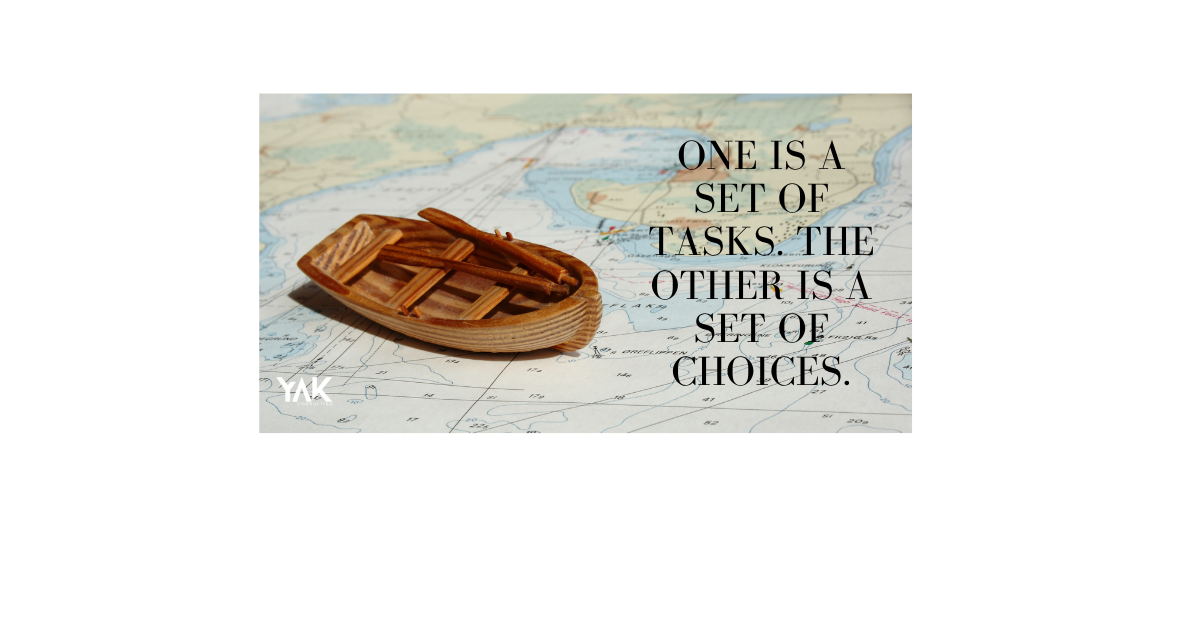
One is a set of tasks and the other is a set of choices. The business plan creates activity and the strategy creates advantage. Without the strategy sitting clearly underneath the plan, the activity has no anchor and the business just creates motion without direction.
How to tell which one you actually have
Sit with your current plan and ask yourself honestly whether it tells you what you are choosing or just what you are doing. Whether it explains what you are willing to stop or only what you intend to start. Whether it describes where you are genuinely headed or just how busy you currently are.
If you cannot answer those questions from the document in front of you, you probably have a solid business plan and a missing strategy. Which means you have a detailed map of how to build the ship and no clear picture yet of where it is supposed to go.
That is worth addressing before you add anything else to the list.
A final thought…
Strategy is not a section in a business plan. It is not a mission statement or a list of goals for the year. It is a genuine set of choices, made deliberately, about where you are going to play and how you are going to compete when you get there.
When those choices are clear, everything else in the business becomes easier to prioritise. The plan becomes a tool rather than a burden. The team understands not just what they are doing but why it matters and that feeling of being constantly busy without a real sense of progress starts to lift.
If your business feels busy but not particularly purposeful right now, this is usually a good place to start looking.
If this has resonated and you want to think through what your strategy actually is versus what your plan says, our free Intro Call is a straightforward conversation with no obligation.